Eureka · for Apple Vision Pro · Free
Physics you can pick up and try.
A physics lab that stands on your table. Weigh an object against brass masses, shorten a pendulum and watch its beat quicken, pull a block and feel friction hold on.
How it teaches
A teacher, an instrument, and your own hands.
01
Real instruments, life size
Each one works as the real thing does. The balance tips, the pendulum keeps time, the liquid rises. Nothing is a picture of an experiment: it is the experiment.
02
A teacher who waits
A narrator shows you a part, asks you to touch it or try something, and goes on only when you have. Every course is four lessons: meet, discover, investigate, challenge.
03
Readings that are live
Masses, times, forces and currents are read off as you work. You predict, record results in a table, watch the graph fill in, and the law appears from what you measured.
- 21working instruments
- 84narrated lessons
- 11–16ages, school physics
- Freefor everyone
The shelf
Twenty-one instruments.
Each opens in the browser version, where a mouse stands in for your hands. Sound on: the teacher speaks.
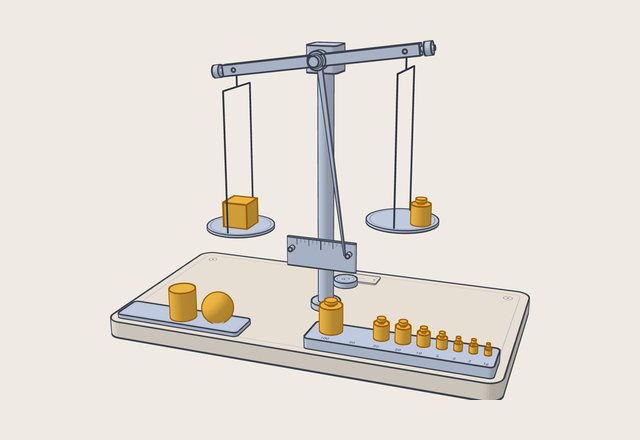 Beam balanceMass is found by comparing it with known masses
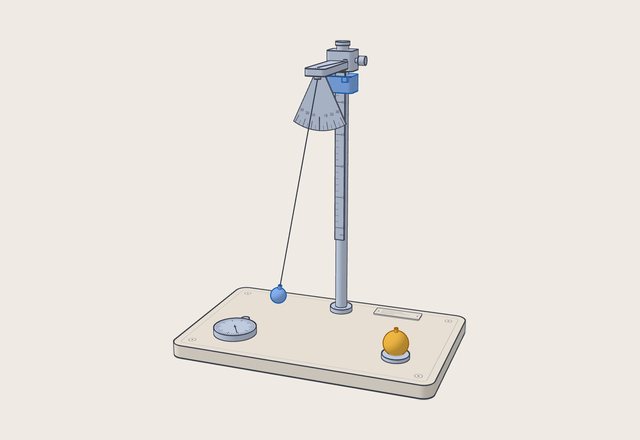 PendulumThe period depends on the length of the thread, not on the mass
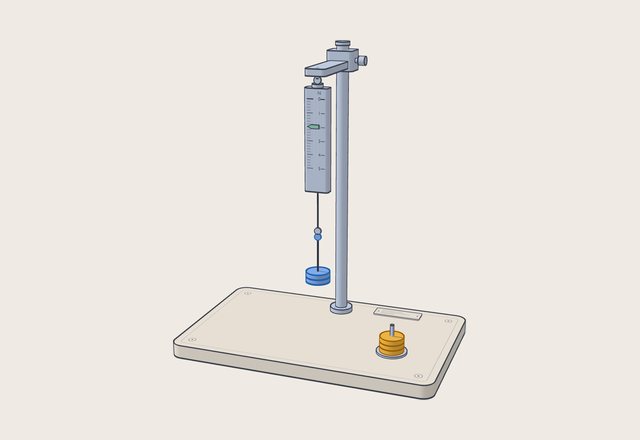 NewtonmeterWeight is a force: W = m · g
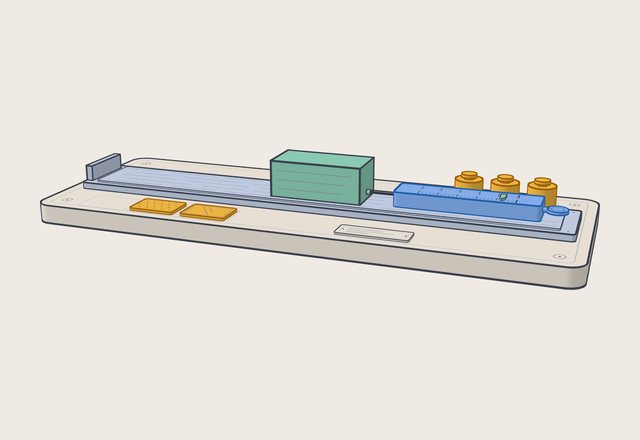 Friction blockFriction depends on the surfaces and on how hard they are pressed together
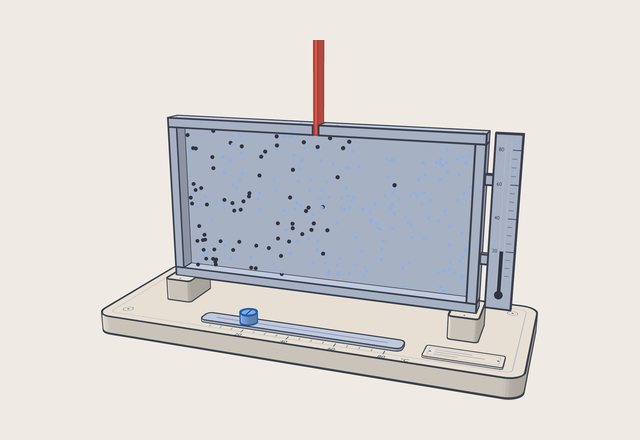 DiffusionParticles spread out on their own, faster when warm
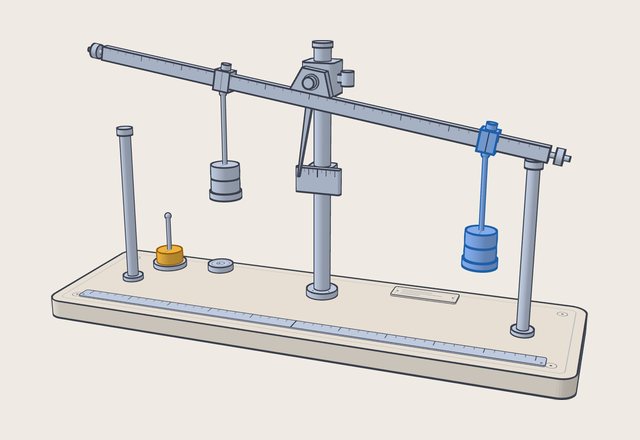 LeverThe principle of moments: F₁ · d₁ = F₂ · d₂
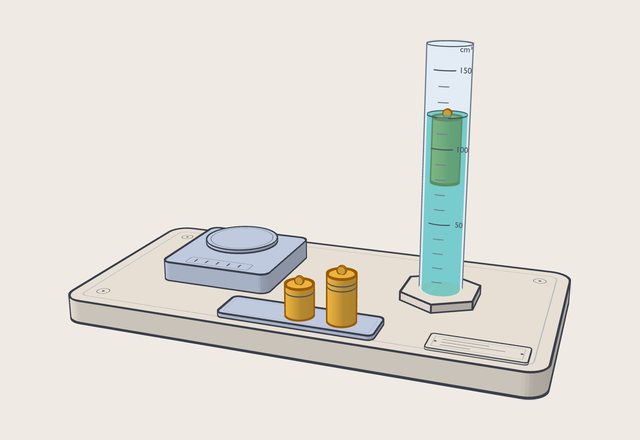 Measuring cylinderDensity is mass divided by volume: ρ = m / V
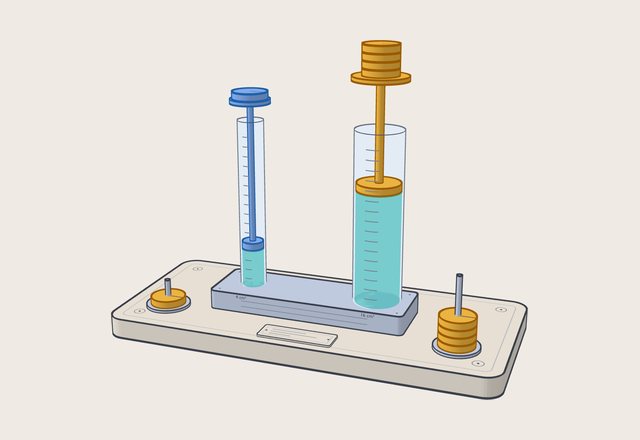 Hydraulic pressA liquid passes pressure on: F₁ / A₁ = F₂ / A₂
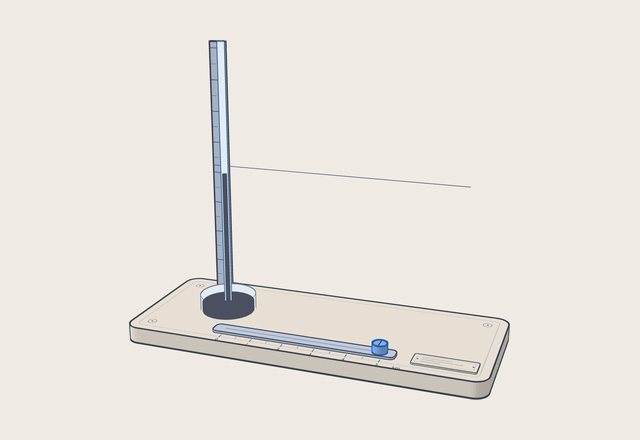 BarometerThe air presses on everything beneath it
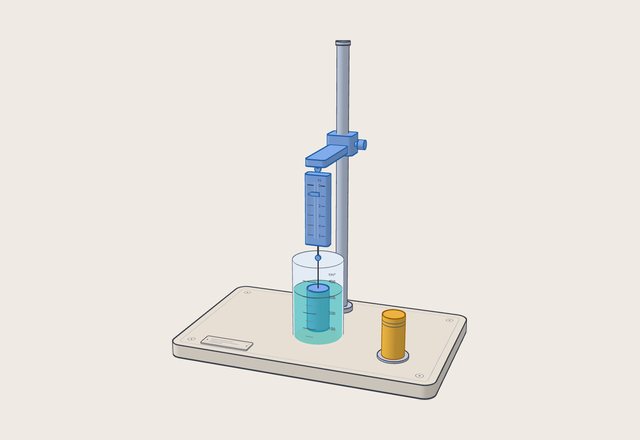 UpthrustA body in a liquid is pushed up by the weight of liquid it displaces
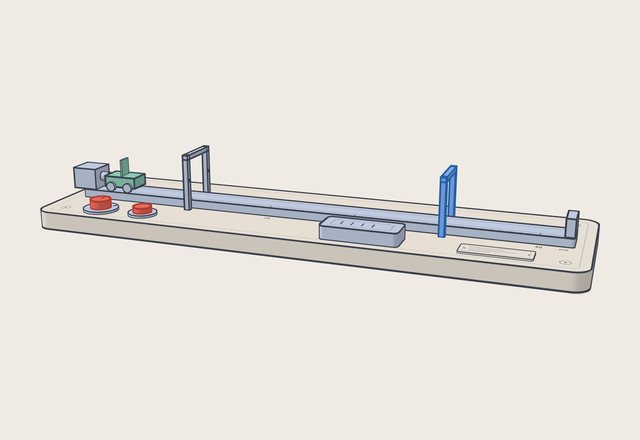 Cart on a railSpeed is distance divided by time
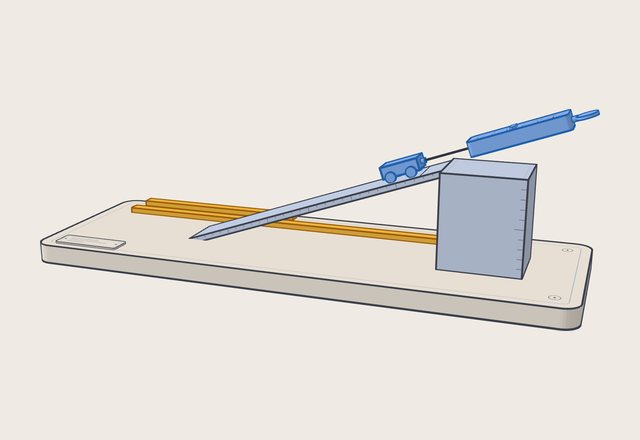 Inclined planeA ramp trades force for distance: the work stays the same
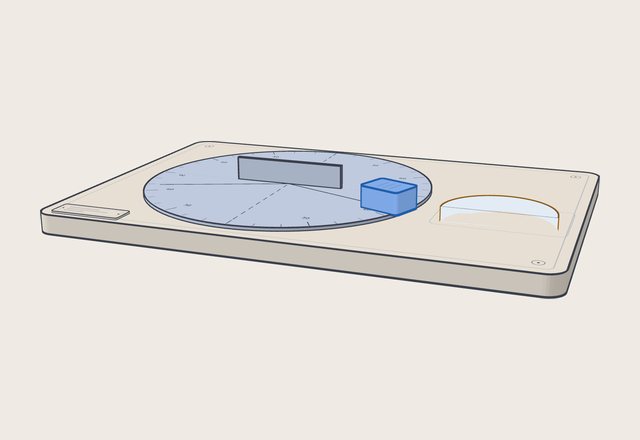 Ray boxLight reflects at the angle it arrives, and bends on entering glass
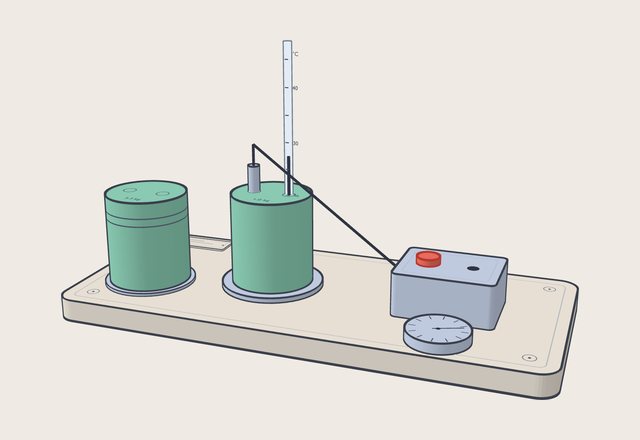 Specific heat capacityThe energy needed to warm one kilogram by one degree
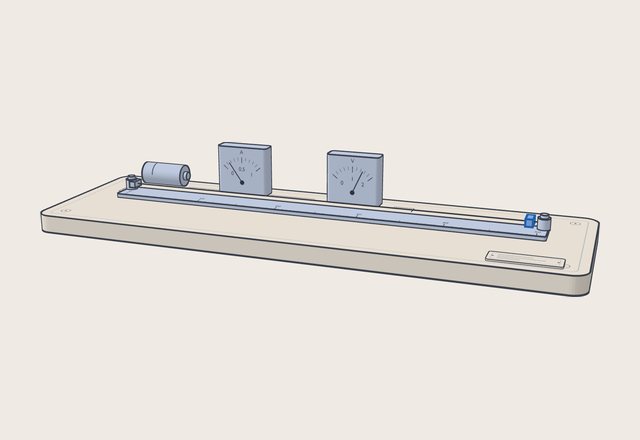 Resistance of a wireTwice the length, twice the resistance
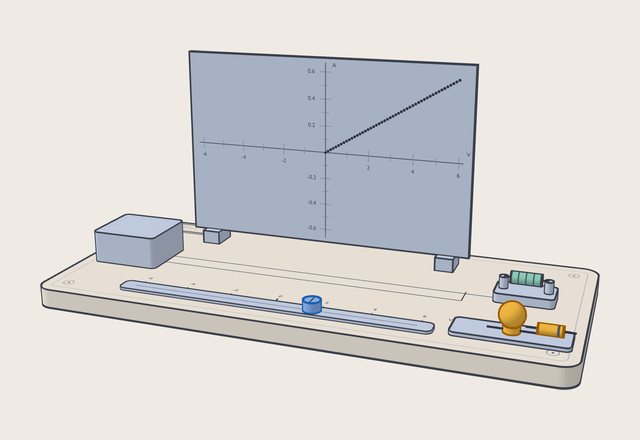 I–V characteristicsHow current follows potential difference in a resistor, a lamp and a diode
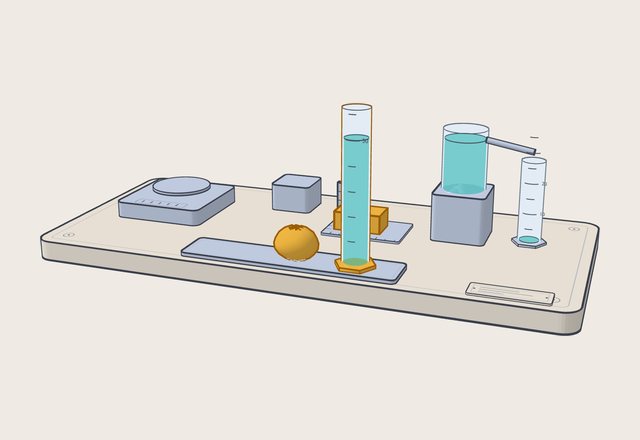 DensityRegular and irregular solids, and a liquid
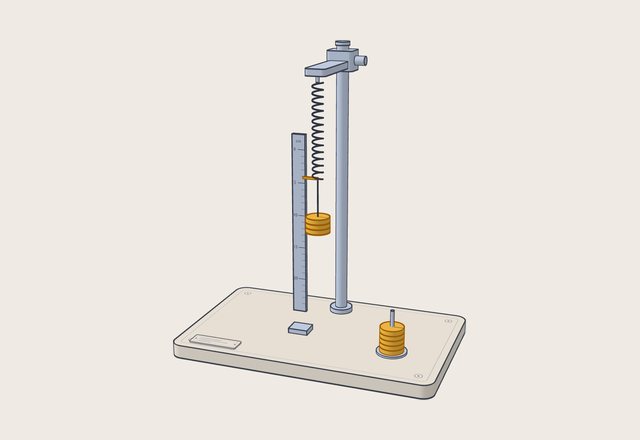 Force and extensionHooke’s law: F = k · e, up to the limit of proportionality
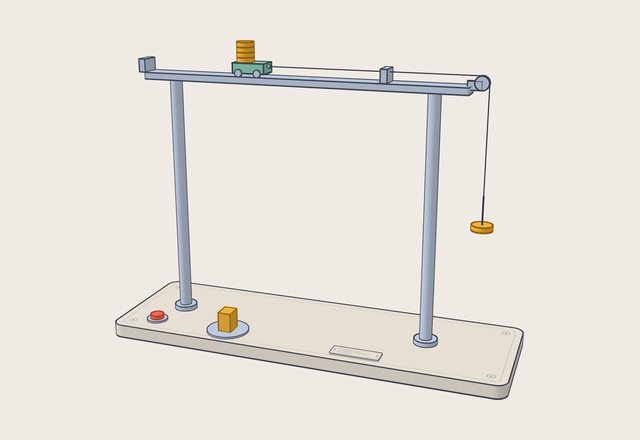 Trolley and rampNewton’s second law: F = m · a
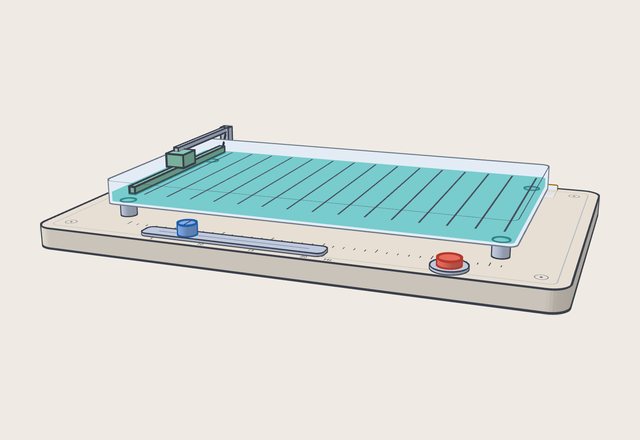 Ripple tankWave speed is frequency times wavelength
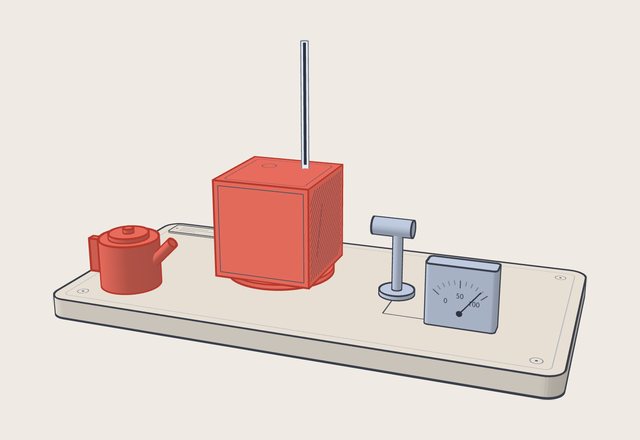 Leslie cubeDull black surfaces radiate more than shiny ones
Try it
No headset needed to look.
The browser version has every instrument and every lesson. It works best on a computer. The real thing, on Apple Vision Pro, is the one you pick up.